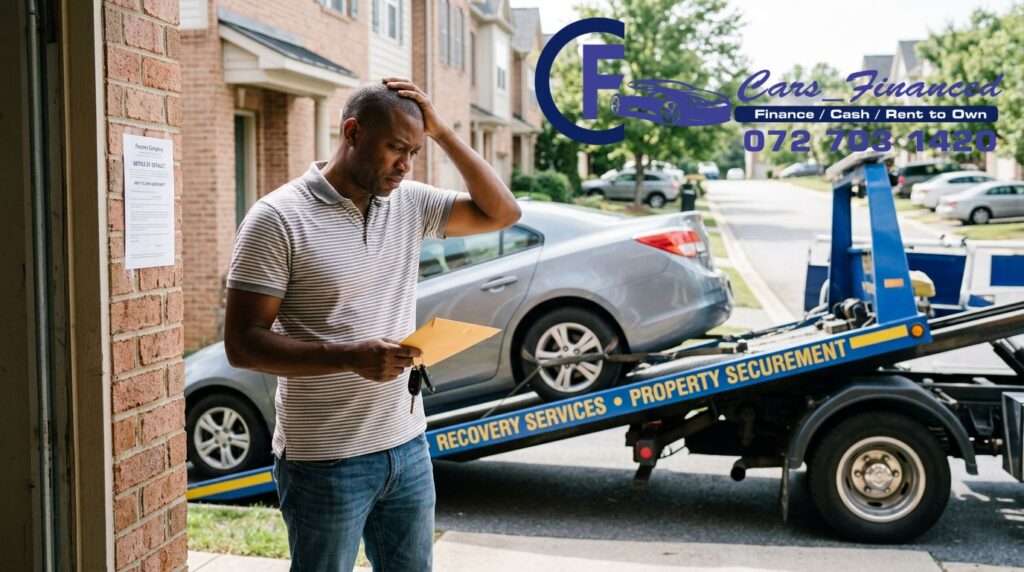
Missed a payment?
Contact your provider as soon as possible and ask what options are available.
Rent-to-Own
What Happens If I Miss a Rent-to-Own Payment?
Missing a rent-to-own payment can be stressful, but a missed payment does not automatically mean that you will immediately lose your vehicle. The important thing is to understand what can happen next, communicate with your provider and act before arrears become more difficult to resolve.
By: Grace Klaas
•
8 April 2025
•
9 min read
•
Updated 23 September 2026
What Happens After a Missed Rent-to-Own Payment?
When a scheduled payment is not successfully collected, the account may move into arrears. Your provider may then contact you to notify you of the missed payment and the amount that is outstanding.
The exact consequences depend on your agreement, the provider involved and the circumstances surrounding the missed payment.
The most useful thing you can do is communicate early. If you know that you cannot make the payment on time, contact your provider as soon as possible rather than waiting for the arrears to accumulate.
The most important first step
Contact your provider as soon as possible. Explain your circumstances and ask what options may be available. If an arrangement is reached, request confirmation in writing.
How Rent-to-Own Arrears Can Escalate
If arrears remain unpaid, the situation can become progressively more serious. Where the National Credit Act applies to the agreement, the credit provider must follow the applicable legal enforcement process.
1
First stage
Payment is missed
The scheduled payment is not successfully collected and the account may move into arrears. The provider may contact you to request payment or discuss the outstanding amount.
2
Early arrears
Follow-up contact
If the missed payment remains unpaid, the provider may continue contacting you about the arrears. Additional charges may apply depending on your agreement and applicable law.
3
Formal notice
Section 129 process
Where the National Credit Act applies, a credit provider generally has to comply with the Act’s required notice and enforcement procedures before pursuing enforcement through the courts.
4
Legal enforcement
Court proceedings may follow
If the default remains unresolved, the credit provider may take the matter further through the applicable legal process. Depending on the agreement and circumstances, this can include seeking a court order relating to enforcement or repossession.
5
Enforcement
Vehicle repossession may become possible
If the legal requirements have been satisfied and the necessary authority has been obtained, the vehicle may ultimately be repossessed. Depending on the circumstances, a shortfall could remain after the vehicle is sold.
Do not ignore formal notices
If you receive a formal notice concerning your credit agreement, read it carefully and act promptly. The National Credit Regulator specifically advises consumers not to ignore Section 129 notices or other final notices from credit providers.
Understanding a Section 129 Notice
Section 129 of the National Credit Act is important because it forms part of the process a credit provider must follow when seeking to enforce a credit agreement after default.
The notice is not something a consumer should ignore. It is an opportunity to understand the arrears and consider the options available before the matter progresses further.
Section 129 — What You Need to Know
What is it?
A formal notice associated with the enforcement process under the National Credit Act.
Why does it matter?
It alerts the consumer to the default and the steps that may be available to address the situation before further enforcement.
What can I do?
Depending on your circumstances, options can include bringing payments up to date, seeking debt counselling or using an appropriate dispute-resolution process.
Should I ignore it?
No. Ignoring a formal notice can allow the matter to progress. If you do not understand the notice, consider obtaining professional advice.
Where can I get help?
The National Credit Regulator provides consumer information and maintains a register of registered debt counsellors.
Keep your documents
Keep copies of your agreement, payment records, correspondence, notices and proof of any payments you make. Having a clear record can make it much easier to understand and resolve an account dispute.
Your Options When You Are in Arrears
Your available options depend on your agreement and financial circumstances. The earlier you communicate, the more opportunity there may be to find a practical solution.
Bring the account up to date
If you are able to pay the outstanding amount, ask the provider for the exact amount required to bring the account up to date. Request confirmation once the payment has been processed.
Discuss a payment arrangement
If you cannot settle the full arrears immediately, ask whether the provider is willing to agree to a payment arrangement. Any arrangement should be confirmed in writing.
Ask about temporary assistance
If your financial difficulty is temporary, ask whether your provider offers any payment-relief options. Availability will depend on the agreement and the provider’s policies.
Consider debt counselling
If you are struggling with several credit obligations rather than one isolated payment, debt counselling may be an option if you meet the requirements for debt review. Use a debt counsellor registered with the National Credit Regulator.
Get professional advice before surrendering the vehicle
If continuing the agreement is no longer affordable, obtain advice before making a decision about voluntarily surrendering the vehicle. A vehicle sale does not necessarily mean that every amount owing disappears.
Communication matters
If you are struggling to make your payment, do not simply disappear. Contact the provider, explain the situation and ask what options are available. Keep a written record of the conversation and any arrangement that is agreed.
What to Do — and What Not to Do
✓ Do These Things
Contact your provider as soon as possible.
Be honest about your financial circumstances.
Ask for the exact arrears amount.
Keep proof of every payment.
Keep copies of emails, letters and messages.
Read formal notices carefully.
Ask for payment arrangements in writing.
Seek professional help if your debt problems are broader than one account.
× Avoid These Mistakes
Do not ignore calls or formal correspondence.
Do not assume the arrears will disappear.
Do not rely only on verbal promises.
Do not ignore a Section 129 notice.
Do not hide or move the vehicle to avoid the process.
Do not take on expensive additional debt without considering the consequences.
Do not wait until several payments have been missed before asking for help.
How to Prevent Missed Payments in Future
Keep enough money available before the debit order
If your agreement uses a debit order, make sure sufficient funds are available before the scheduled collection date. Remember to account for other debit orders that may run around the same time.
Build an emergency vehicle fund
If possible, gradually build a small reserve specifically for your vehicle payment. Even a modest buffer can help if an unexpected expense affects your cash flow.
Monitor your bank account
Checking your account regularly can help you identify failed payments quickly. If a debit order fails, contact the relevant provider rather than assuming the matter has been resolved.
Keep your provider’s contact details
Save your provider’s telephone number, email address and account reference in your phone. Having the information available makes it easier to act quickly when something goes wrong.
Frequently Asked Questions
A missed payment can place your account into arrears. Your provider may contact you about the outstanding amount. If the arrears are not resolved, the provider may follow the applicable enforcement process under the National Credit Act where the agreement falls within the Act.
A missed payment does not mean that your vehicle can simply be taken immediately. Where the National Credit Act applies, the credit provider must follow the required enforcement process. If you are concerned about repossession, seek advice promptly and review your agreement carefully.
A Section 129 notice is part of the enforcement process under the National Credit Act. It alerts a consumer to a default and the steps that may be available to address the situation before further enforcement proceedings. Do not ignore one if you receive it.
Contact your provider as soon as possible. Explain your circumstances and ask what options are available. If you agree to a payment arrangement or other solution, ask for the agreement in writing.
Debt counselling may be available if you are over-indebted and your credit agreements fall within the National Credit Act. Speak to a debt counsellor registered with the National Credit Regulator to determine whether debt review is appropriate for your circumstances.
The consequences depend on the agreement and the legal process followed. If a vehicle is sold after repossession, the proceeds may be applied against amounts owing. A shortfall may remain depending on the outstanding balance, sale proceeds and applicable costs. Obtain professional advice about your specific circumstances.
Concerned About Your Rent-to-Own Agreement?
Whether you have already missed a payment or are worried about an upcoming payment, getting advice early can help you understand your options.
Grace Klaas is a vehicle finance and procurement specialist with more than nine years of industry experience. She is the founder of
Cars Financed
and
graceklaas.com
.
Important:
This article provides general information about rent-to-own vehicle payments and South African credit processes. It is not legal or financial advice. The National Credit Act may apply differently depending on the type and structure of an agreement. Always review your specific agreement and consider obtaining advice from a suitably qualified professional where necessary.